
VAL341 · Atrosimab
Monovalent TNFR1 antagonist selectively blocking pathogenic TNF signaling to restore immune and tissue homeostasis across inflammatory and immunological diseases.

Modality: Monovalent antibody derivate developed using our proprietary HERAKL1S engineered antibody platform.
Disease biology: Exclusive suppression of dysregulated TNF/TNFR1 signaling that drives excessive inflammation and tissue damage. It preserves TNFR2-mediated signaling that supports immune regulation, tissue repair and regeneration.
Therapeutic area: Immunological & Inflammatory (I&I) diseases
Development status: Phase I
Beyond Broad TNF Blockade: Selective Inhibition of TNFR1
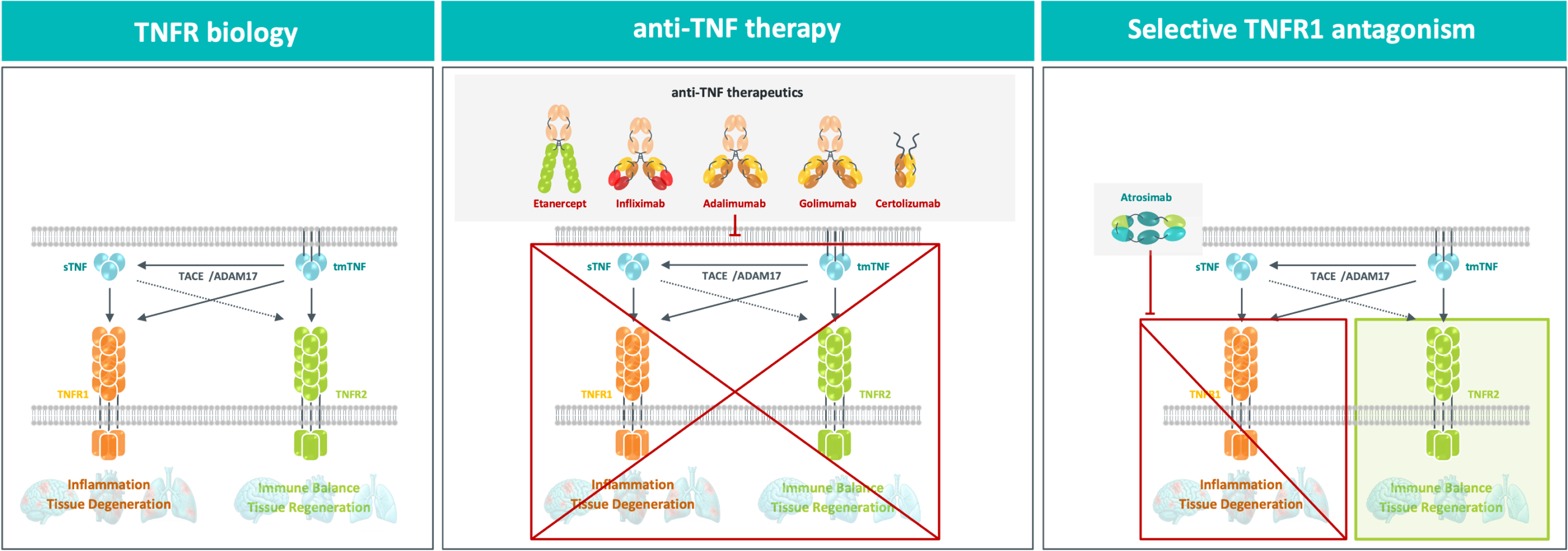
TNF signals through two receptors with distinct and often opposing functions. TNFR1 is broadly expressed and drives many of the inflammatory and cytotoxic effects associated with pathogenic TNF signaling, whereas TNFR2 supports immune regulation, tissue protection, and repair.
Clinically approved anti-TNF therapies neutralize TNF and thereby inhibit signaling through both TNFR1 and TNFR2. This broad mechanism is highly effective in diseases such as rheumatoid arthritis, inflammatory bowel disease, and psoriasis, where pathological TNFR1 signaling is a major driver of inflammation. However, simultaneous inhibition of TNFR2 may also interfere with its distinct immunoregulatory and tissue regenerative functions. This difference in TNFR biology may contribute to the limited efficacy of anti-TNF therapeutics in diseases such as multiple sclerosis and cardiovascular disorders, where TNFR2-mediated protective and reparative mechanisms play a critical role.
In contrast, Atrosimab directly targets pathological TNFR1 signaling while preserving TNFR2-mediated functions involved in immune regulation, host defense, and tissue repair. By separating the pathological effects of TNFR1 from the beneficial functions of TNFR2, this targeted mechanism has the potential to provide more precise pathway control and an improved therapeutic window - expanding the therapeutic scope beyond conventional anti-TNF therapies.
Monovalent Antagonists: The Route to Controlled TNFR1 Blockade
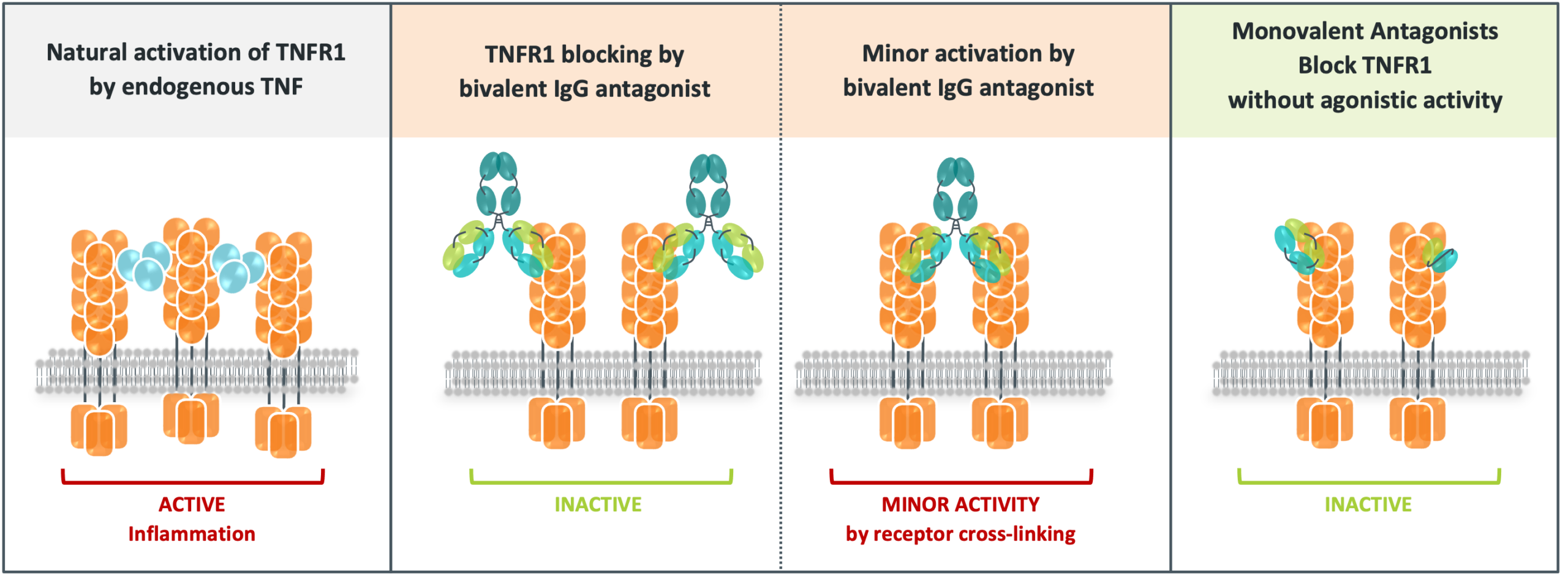
TNFR1 is a receptor in which antibody valency matters. Bivalent TNFR1 antagonists can cross-link receptors and induce unwanted receptor clustering, resulting in low-level TNFR1 activation despite their intended antagonistic mechanism. This liability has been demonstrated experimentally and has complicated the clinical development of bivalent TNFR1 antibodies.
Monovalent antagonists overcome this fundamental limitation by preventing antibody-mediated TNFR1 cross-linking while maintaining potent receptor blockade. Clinically relevant monovalent formats therefore represent an important next-generation approach to potent TNFR1 inhibition, combining selective pathway blockade with the potential for improved functional and therapeutic control.
Monovalency Without Compromising Drug Developability
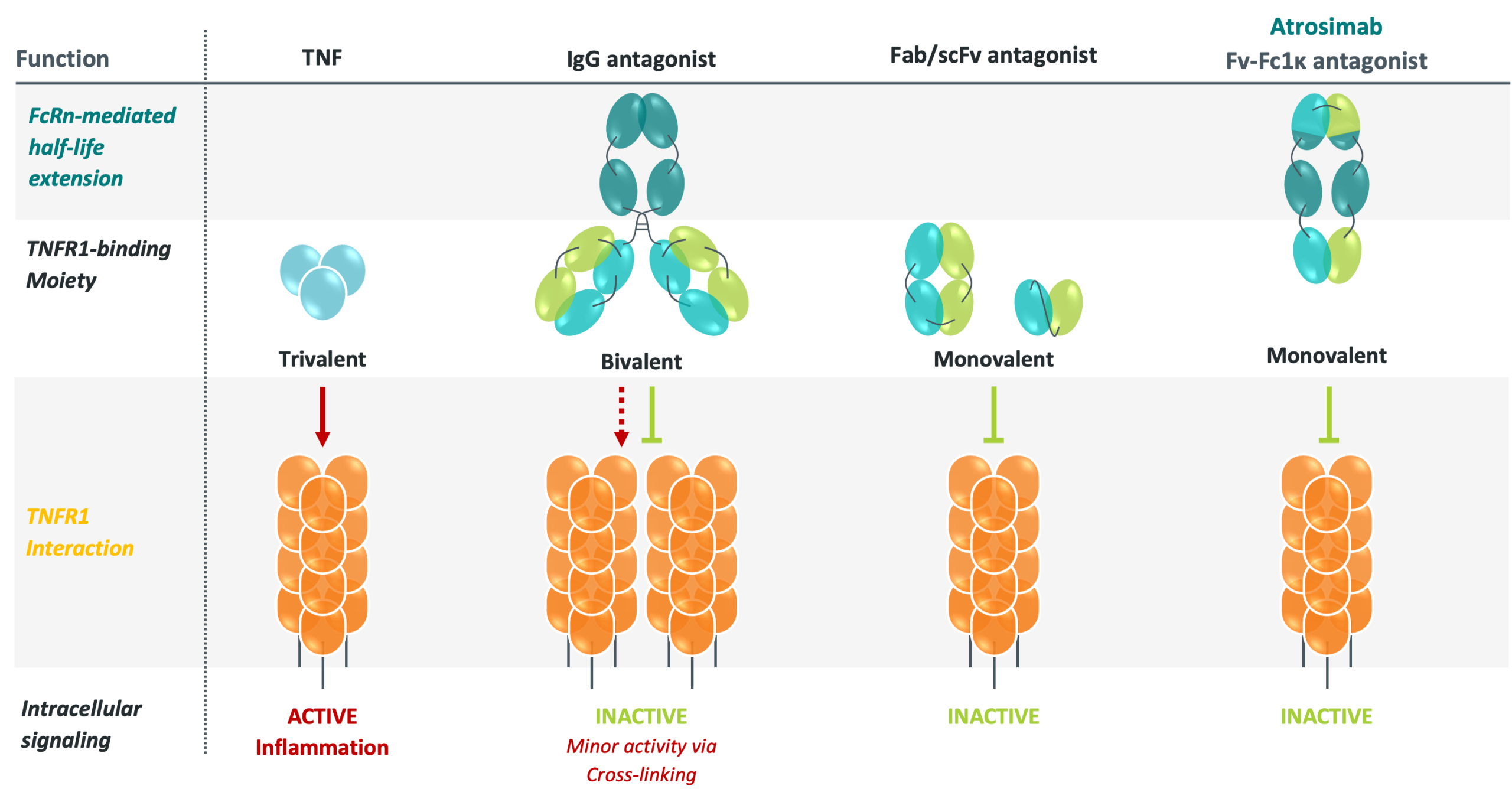
Atrosimab is designed to overcome the key limitations of small monovalent antibody fragments such as scFv and Fab. While these formats prevent TNFR1 cross-linking, their small size leads to rapid clearance and limited systemic exposure. Atrosimab combines a monovalent TNFR1-binding domain with an engineered Fc, providing FcRn-mediated half-life extension together with enhanced molecular stability and favorable manufacturability.
The result is a monovalent format that combines selective TNFR1 antagonism with the pharmacokinetic and CMC characteristics needed for clinical development and scalable manufacturing.

Monovalent and selective TNFR1 antagonism by Atrosimab enables
Atrosimab offers a more precise therapeutic activity compared to marketed anti-TNF therapies and expands the treatable indication space beyond what conventional anti-TNF therapies can achieve.